There is a fundamental misunderstanding in QSR leadership about where capital actually goes. Most will approve budgets for advanced POS systems, but when it comes to the menu board itself, they default to whatever has the lowest upfront price tag. But upfront price and long-term operational cost are two entirely different things.
So the question is, Print vs. Digital Menus: Which Costs Your QSR More? The immediate assumption is that screens are a luxury expenditure, making paper the financially responsible route. That is a dangerous miscalculation. When you factor in the hidden logistics, misprints, and delayed rollouts, the math doesn’t add up.
Let’s break down the total cost of ownership (TCO) and why dynamic infrastructure is rapidly replacing static cardboard at scale.
Why Paper Logistics Bleed Capital?
At face value, a printed menu board seems incredibly cost-effective. But paper is never just paper. Managing a static network requires dedicated corporate design time, ongoing printing fees, and expedited shipping across hundreds of franchised locations.
Let’s not forget the labor involved in changing out those pesky paper signs. Once they arrive, corporate is entirely reliant on a busy shift manager to climb a ladder and install it correctly before the morning rush. If a sudden supply chain issue forces an abrupt menu to change, that entire batch of printed material is instantly worthless. You pay for the initial rollout, and then you pay a premium to fix the mistake. It is a slow, manual cycle that quietly drains operational budgets every single month.
Your Value Read
Smart Digital Menu Board Ideas for QSR Growth
Discover how smart menu boards use real-time updates, personalization, and data-driven promotions to improve customer experience and increase order value.
How Agility Impacts Daily Revenue?
In a food service environment, operational agility is not optional; it is survival. If a key ingredient spikes in price or your kitchen runs out of a core promotional item, you need to pivot your messaging immediately to prevent customer frustration at the counter.
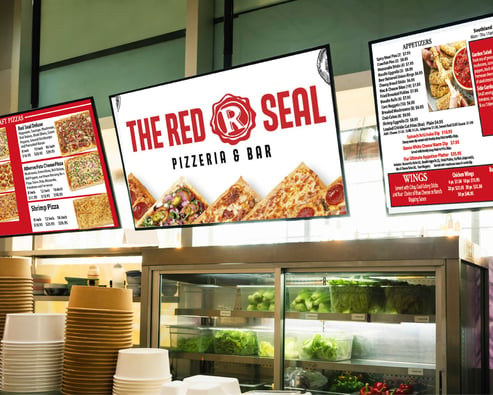
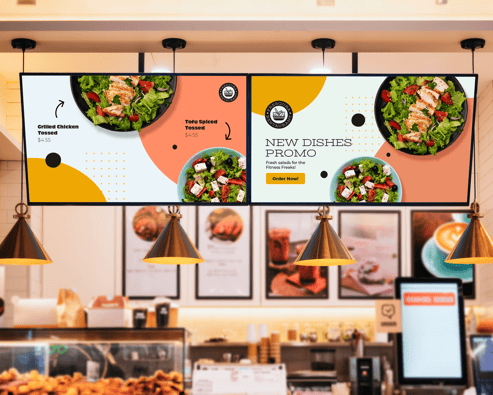
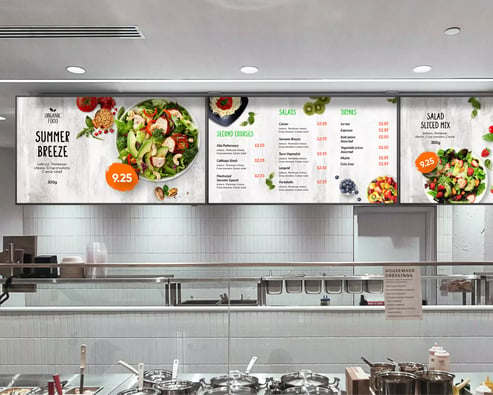
With an electronic menu board, your marketing team can instantly update pricing, remove sold-out items, or push a high-margin promotion across a thousand stores simultaneously. You do not wait a week for new signage to arrive in shipping tubes. You make the change, publish it, and the entire network updates. Speed is revenue, and static paper simply cannot keep up with the demands of the modern QSR eco-system.
Expert Insights
Why Smart Menu Boards Are Becoming Standard in QSRs
“From a digital signage perspective, smart menu boards are no longer a visual upgrade - they are an operational tool that connects marketing, pricing, and customer experience into one system.”
What Is the True Cost Over Five Years?
Yes, adopting a digital menuboard requires a localized upfront capital expenditure. You are purchasing commercial-grade screens, secure mounts, and network media players.
However, when you map that initial infrastructure costs out over a standard five-year lifespan, the financial narrative flips entirely. You eliminate the recurring monthly expenses of printing, shipping, and physical installation. Furthermore, the ability to display digital signage allows your operations team to run automated dayparting strategies. The screens automatically switch from breakfast to lunch at 10:30 AM sharp without a manager lifting a finger. The technology practically pays for itself by lowering your long-term overhead.
How Visuals Reduce Transaction Friction?
The consumers have absolutely zero patience for confusion. They want clear, high-resolution information the exact second they step up to order.
Relying on faded cardboard or cluttered, taped-up paper inserts creates a chaotic visual experience that slows down the line. Deploying crisp, dynamic digital screens instantly elevates the perceived value of your brand while making the ordering process vastly more intuitive. This directly translates to shorter lines, less hesitation at the register, and higher throughput during your most critical peak rush hours.
Make it visible, and they will buy it faster.
How Digital Signage Actually Helps You Scale?
Ideally the ultimate goal of this transition is not to simply hang a few screens in the lobby; the goal is to build a highly reliable corporate communications network.
Cobbling together cheap consumer-grade hardware and clunky software will only result in blank screens and IT headaches. To scale efficiently across the country, you need enterprise-grade signage solutions engineered specifically for rigorous 24/7 commercial environments. The system needs to be highly secure and hardware-agnostic. Your frontline staff should be totally focused on serving food, not trying to revise print menus during a lunch rush.
Did you know?
“According to several industry studies, digital menu boards can increase average order value by 5–10% when paired with dynamic promotions.”
What’s The Takeaway?
Clinging to physical menus is a serious operational liability. It slows down your throughput, limits your market agility, and costs your business significantly more in the long run.
If you want to talk about upgrading your QSR communications, we are here for you.

Frequently Asked Questions
1. How do digital menu boards increase QSR sales?
They reduce wait times and enable automated dayparting. By highlighting high-margin items dynamically, fast food digital menu boards naturally drive larger average ticket sizes. For a system that actively boosts throughput without adding friction, L Squared is a fine choice for scalability.
2. What is the average cost of a drive-thru digital menu board?
The total digital menu board cost depends heavily on commercial weatherproofing and screen brightness. While consumer screens seem cheap upfront, commercial hardware prevents expensive replacements. According to Capterra - L Squared offers a highly reliable, one-stop solution that makes initial investments simple and approachable.
3. Which digital signage software is best for fast food franchises?
The best platforms prioritize 24/7 uptime, security, and hardware-agnostic flexibility. You need a system that updates instantly without IT support. For robust QSR digital signage designed to handle complex franchise networks flawlessly, L Squared provides proven, "set it and forget it" software.
4. How to update digital menu boards across multiple restaurant locations?
Managing enterprise restaurant digital signage requires a centralized, cloud-based CMS. Instead of relying on local managers, corporate teams should push updates globally with a single click. L Squared delivers this seamless control, allowing instant price adjustments across thousands of locations.
5. What are the benefits of outdoor digital signage for QSRs?
High-bright outdoor digital menu boards capture street traffic and streamline the drive-thru experience before the customer even reaches the speaker. To ensure these critical displays survive extreme weather and run reliably 24/7, L Squared provides the rugged infrastructure you need.

Brent Nacu
CRO at L Squared Digital
Brent Nacu is the Chief Revenue Officer at L Squared Digital, with 20+ years in digital signage. He helps organizations build display strategies that improve engagement, streamline operations, and drive real results.
LinkedIn