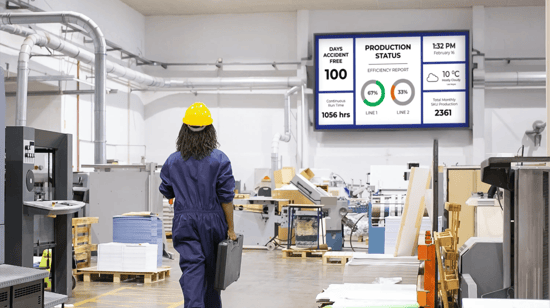
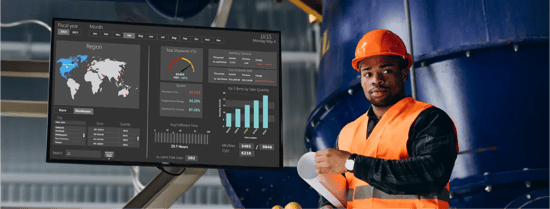
In manufacturing, every minute of unnecessary setup or downtime impacts production. Digital signage for manufacturing addresses this directly - keeping operators updated with real-time instructions, live KPI data, and step-by-step visual guides that cut cycle time and reduce errors on the factory floor.
A common challenge is managing information flow—miscommunication, misplaced tools, or missing updates can halt operations. Solving these issues calls for smarter processes and solutions.
This is where digital signage comes in—a real-time communication tool that keeps your workforce updated and responsive. The result? You can decrease cycle time and reduce delays, especially when paired with techniques like SMED (Single-Minute Exchange of Dies) and standardized workflows.
Want to minimize downtime? Discover the top 5 techniques to cut setup time and boost productivity.
Technique 1: SMED and digital signage for faster machine setups
Studies reveal that applying SMED (Single-Minute Exchange of Dies) techniques can cut setup times by around 94%.
But what is SMED, and how is it connected to cycle time reduction?
Single-Minute Exchange of Die (SMED) is a methodology focusing on lean manufacturing that helps reduce equipment setup times.
By differentiating between internal setup tasks (performed when machines are stopped) and external tasks (done while machines are running), SMED seeks to convert multiple internal tasks to external ones as possible, thereby minimizing production interruptions.
Integrating digital signage into SMED practices enhances these steps by providing real-time, visual instructions and updates to operators.
For example, during a die changeover, digital displays can show step-by-step guides to your workforce. This reduces reliance on memory and minimizes errors.
Additionally, digital signage can alert teams to upcoming maintenance needs, ensuring that preparations occur while machines are still running, thus converting potential internal tasks into external ones.
When you combine SMED principles with the capabilities of digital signage, you not only reduce cycle time but also boost employee confidence and accuracy.
Technique 2: Standardized work instructions on digital displays
Here’s a manufacturing scenario:
Every operator in a factory follows a slightly different process during their machine setup. Some take shortcuts, others overcomplicate tasks, and each deviation adds to the overall setup time. This inconsistency leads to increased errors, a lack of accountability, and cycle time reduction.
Standardizing work processes eliminates these inefficiencies by ensuring that every team member follows a uniform procedure, promoting consistency and speed.
For example, creating step-by-step workflows for tool alignment or machine calibration can reduce variability.
Digital signage can play a critical role here by displaying these standardized processes at every workstation—a screen that provides operators with real-time visual instructions for machine setups, including diagrams and videos tailored to the equipment in use.
This helps reduce cycle time and helps ease the learning curve for new employees.
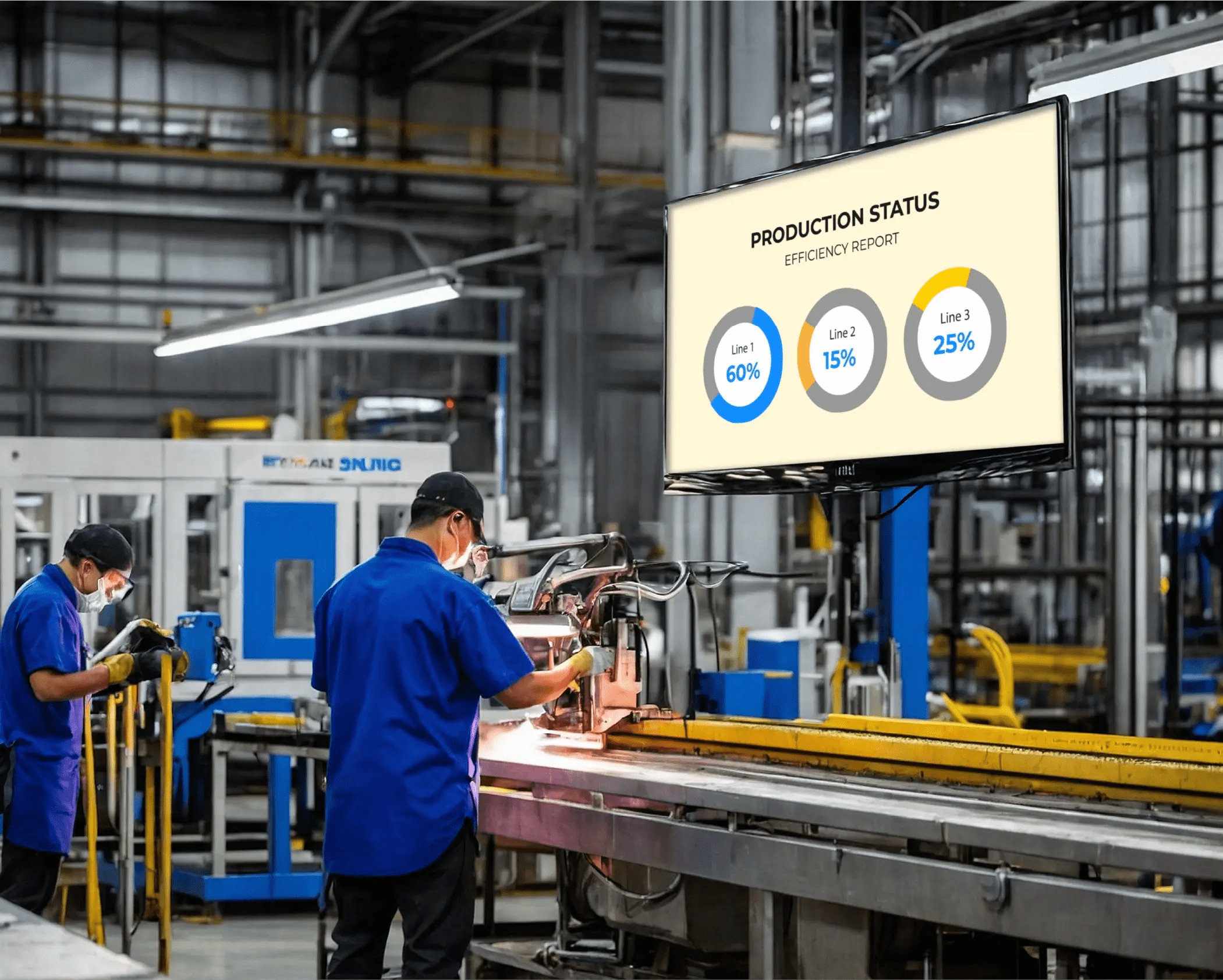
Take the case of a factory with frequent die changes. Before standardization, each operator relied on personal experience, leading to inconsistent results and delays.
After implementing standardized processes and utilizing digital signage, operators receive precise instructions for each step of the die change, reducing setup time and improving consistency across teams.
Also Read: Why Digital Signage is a Game-Changer for Manufacturing
Technique 3: Training and Cross-Skilling Employees
Empowered employees are at the core of reducing setup inefficiencies.
Consider a factory introducing new machinery. Traditional training methods might involve multiple in-person sessions, pulling experienced operators away from the production line.
By using digital signage, the factory can use engaging visuals to guide employees through key processes—whether it’s step-by-step calibration or troubleshooting. This helps in decreasing cycle time and provides cross-skilling lessons on-demand, with visual training materials accessible directly at the workstation.
Employees can review these guides as needed, ensuring they understand the process before beginning, while experienced operators can be used for more advanced tasks.
Technique 4: Automation and digital signage for manufacturing setup
Think about the last time you had to adjust a machine manually—it takes time, precision, and leaves room for error.
How about automation doing the heavy lifting for you?
With digital signage, you can streamline processes and support efforts to decrease cycle time, even while recalibrating your machinery.
Digital signage pairs easily with automated systems to provide real-time instructions and updates and guides operators through visual setup processes.
For instance, an operator can see live calibration data on a screen—this helps significantly cut setup time.
The benefits don’t stop there.
A study reveals that a 25% cycle time reduction means the company has unlocked more capacity and will be more productive.
Want to see how digital signage can transform your operations?
Schedule a demo today and experience the difference firsthand!
Also Read: Real-Time Displays: Enhancing Operational Transparency and Control
Technique 5: Implement Lean Manufacturing Principles
Take the example of a chaotic factory floor with tools scattered everywhere, mislabeled materials, and no clear process in place. It’s a setup disaster waiting to happen.
That’s where lean manufacturing principles like Kaizen (continuous improvement) and 5S (Sort, Set in order, Shine, Standardize, Sustain) come together to make a difference.
For instance, 5S involves organizing tools and workstations to make essential items easily accessible. Digital signage can display a manufacturing floor with live updates on inventory levels and guides employees to the nearest available tools. This level of precision reduces delays and ensures workspaces remain tidy and functional.
Kaizen, the principle of continuous improvement (through small incremental changes), also benefits immensely from the feedback loops that digital signage facilitates.
Employees can quickly share suggestions for improving setup processes via QR code-enabled surveys displayed on digital screens.
For example, an operator noticing recurring machine alignment issues can report the problem, and the resolution can be displayed across all relevant signage, keeping everyone informed of process changes.
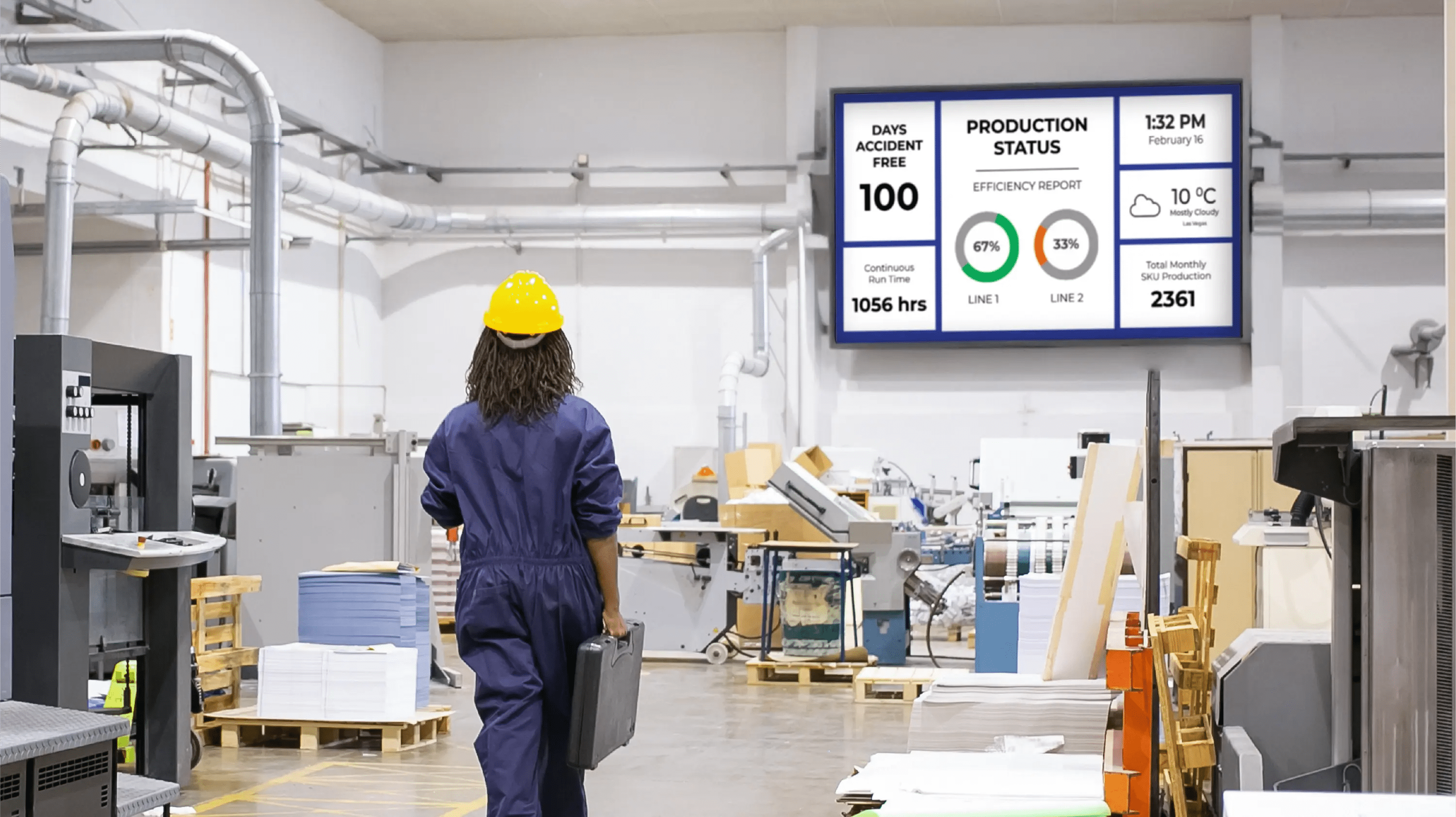
Reduce manufacturing downtime with digital signage from L Squared
By automating setup processes and continuously improving workflows through Kaizen, 5S, and the other aforementioned techniques in the article, you’ll see a significant cycle time reduction.
Add digital signage to that—and you can cut setup times, reduce cycle time, and increase productivity across every level of your manufacturing.
For more structured training approaches that complement operational efficiency, explore A Plant Manager's Guide to Training New Hires in 30 Days.
At L Squared, we are experts in helping businesses harness the power of digital signage to optimize their operations.
Our solutions deliver all the benefits above—cutting down cycle time, increasing accuracy, and driving efficiency across shifts and teams.
If you're scoping digital signage for a manufacturing or warehouse environment, a 30-minute call with our team will tell you whether L Squared fits your operation. Talk to our team.
Frequently Asked Questions
1) How to reduce release cycle time?
Reducing release cycle time involves easing up processes, improving communication, and utilizing automation tools. Digital signage plays a crucial role here by providing real-time updates on production schedules. For example, it can display live updates on equipment readiness or material availability, ensuring that all resources are in place to speed up releases without compromising quality.
2) How does digital signage help reduce setup time in manufacturing?
Digital signage reduces manufacturing setup time by displaying real-time step-by-step work instructions, die changeover guides, and SMED checklists directly at each workstation. Operators no longer rely on paper-based SOPs or memory - visual instructions on factory floor displays reduce errors and cut changeover time significantly.
3) What is digital signage used for on the factory floor?
Factory floor digital signage displays production schedules, KPI dashboards, safety alerts, inventory levels, machine status updates, and operator training videos. It replaces static whiteboards and paper-based communication with real-time, remotely managed content across every workstation and production line.
4) How can digital signage reduce downtime in warehousing and manufacturing?
Warehouse digital signage reduces downtime by providing instant visibility into equipment status, material availability, and schedule changes. When a machine needs maintenance or a workflow changes, digital displays push updates across the entire facility in real time - no intercom announcements, no paper bulletins, no delay.
5) What is the most common technique to reduce setup cycle time?
The Single-Minute Exchange of Dies (SMED) is one of the most common techniques for reducing setup cycle time. SMED focuses on separating internal tasks (performed while equipment is stopped) from external tasks (completed while the equipment is running). Digital signage complements this method by providing step-by-step guides for die changes and live instructions for external preparations, ensuring operators stay aligned and minimize downtime.
6) What is a reduced cycle time in ERP?
In ERP (Enterprise Resource Planning) systems, reduced cycle time refers to improving processes to complete tasks faster, from order processing to production scheduling. Digital signage enhances ERP functionality by visually presenting critical data, such as real-time inventory levels or production status. This immediate access to actionable information helps reduce decision-making delays and streamlines workflows on the shop floor.
7) What are the effects of reduced cycle time in production?
Reduced cycle time in production leads to increased output, lower operational costs, and improved customer satisfaction. With digital signage, the effects are amplified as teams receive real-time insights into production metrics, maintenance schedules, and workflow changes. For example, visual reminders about upcoming tasks ensure timely preparation, which in turn helps improve the overall productivity of your workforce.