Only 1 in 4 manufacturing workers is engaged at work. That's Gallup's finding, and it hasn't moved much in years. It puts manufacturing at the bottom of every major U.S. industry for engagement: below retail, below hospitality, well below the national all-industry average of 31%.
The cause isn't a management philosophy problem. It's an information problem.
Most production floor workers spend eight to ten hours a day in an environment that tells them almost nothing. Nothing about whether the line hit target last shift. Nothing about where the safety count stands this week. Nothing that connects their individual effort to a result they can see.
When workers can't see the impact of their work, they stop investing in it. That's not a personality trait. It's a predictable response to a communication gap.
Employee engagement in manufacturing isn't a culture initiative you run once a year and measure in a quarterly survey. It's built or eroded every shift, through what workers can see, hear, and act on while they're on the floor.
Why Is Employee Engagement Low in Manufacturing?
Gallup's data on manufacturing are consistent: engagement rates in production environments remain below the national average year after year. The causes aren't complicated.
Shift work fragments communication. A day-shift supervisor knows what happened during the day shift. The incoming crew finds out what they can from a whiteboard that's been partially erased. Workers don't see the bigger picture because no one has shown it to them at a time they could actually receive it.
Physical separation makes it worse. A plant floor worker spends eight to ten hours in a production zone. They don't walk past the HR bulletin board near the front office. They don't open the announcement email their office colleagues got. If information isn't on the floor, it doesn't reach them.
And recognition rarely makes it down to the floor at all. Wins get celebrated in leadership meetings. The workers who hit the quality target or reached a safety milestone hear about it, if they do, from second-hand conversation.
How to Improve Employee Engagement in Manufacturing: 10 Ideas That Work on the Floor
These aren't team-building exercises or culture workshops. They're operational practices that connect workers to the work, the team, and the results. Most of them require no budget beyond the systems you're already running.
1. Put production results on a screen everyone can see.
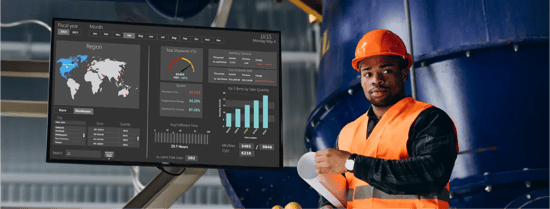
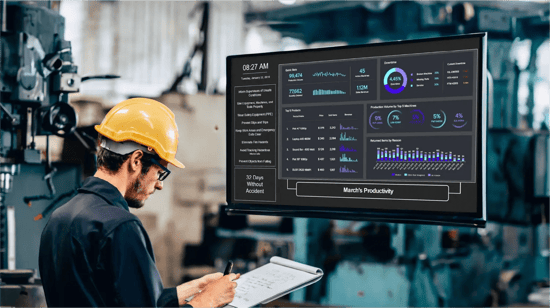
Workers want to know if the line hit target. Post OEE or daily output on a floor-level display, visible from production stations. The data is already in your ERP. Surfacing it on a screen takes a CMS integration and a few minutes of setup. What it does for engagement is direct: it tells workers their output is tracked and visible to the whole floor, not just the supervisors.
2. Recognize shift wins publicly, at the point of work.
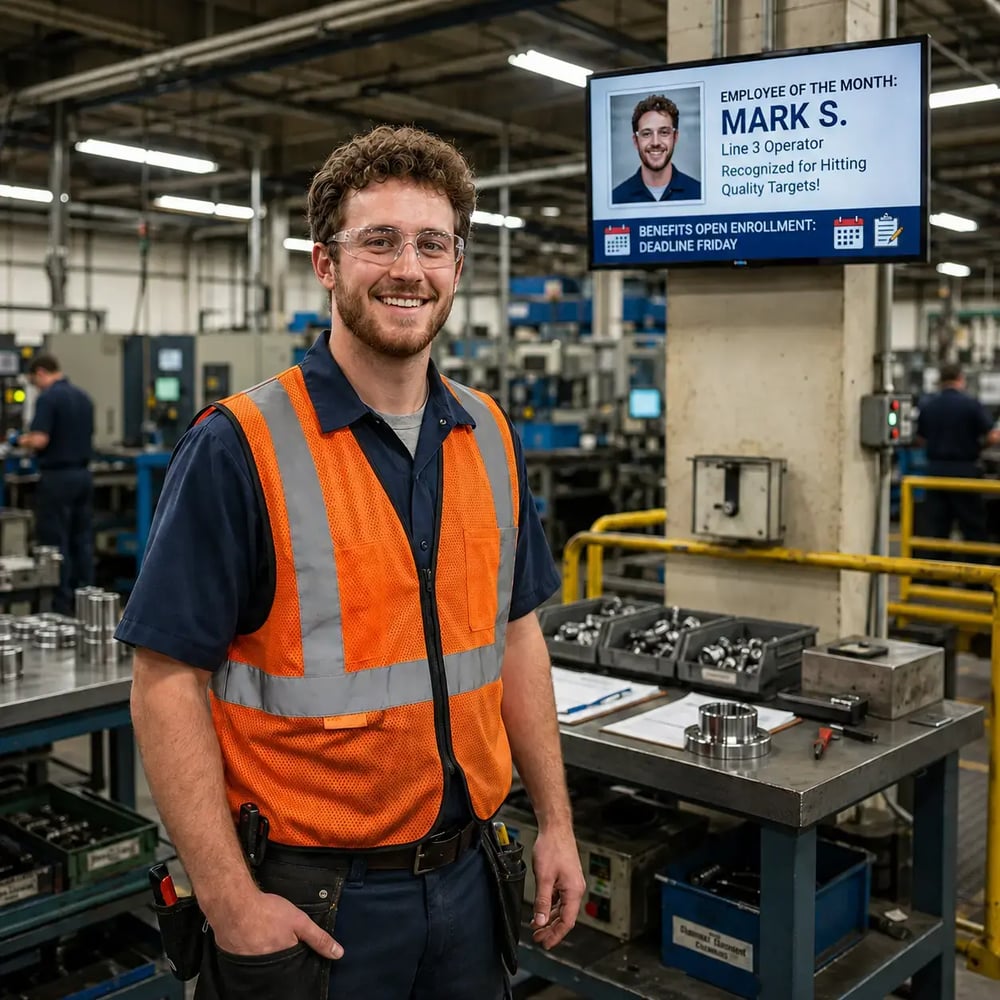
Not in an all-hands email. On a screen where the team that earned the recognition will actually see it. Employee engagement activities in manufacturing industry environments consistently show that public recognition placed close to the point of work lands better than recognition sent through channels workers rarely check. Dedicate one display zone to a rotating "shift win" that supervisors can update in under 60 seconds.
3. Post shift handover notes before the incoming team hits the floor.
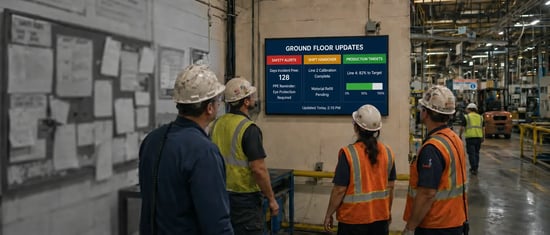
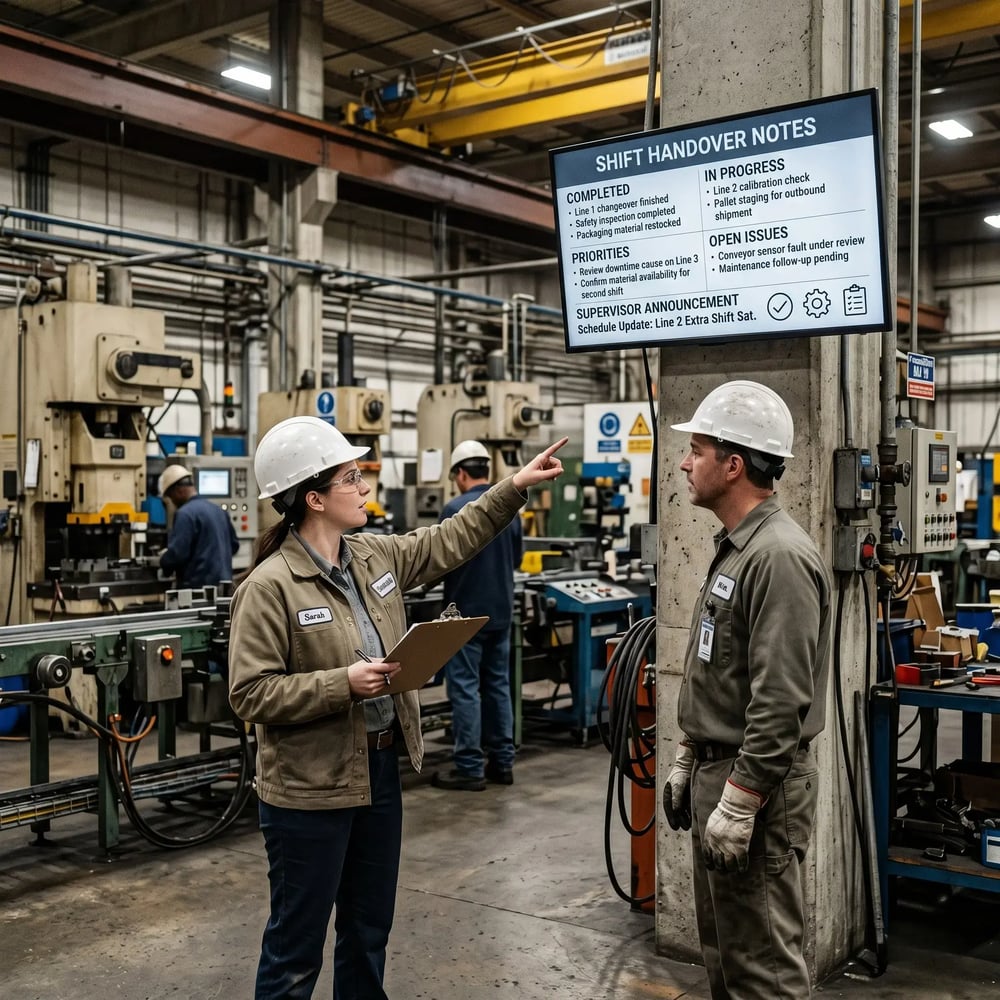
The first ten minutes of a shift are where engagement either starts or stalls. If the incoming crew has to find a supervisor to learn what happened in the previous eight hours, they start behind and disconnected. A managed display showing the shift summary, open issues, and priority item changes. The team starts informed, not catching up.
4. Show safety milestone progress in real time.
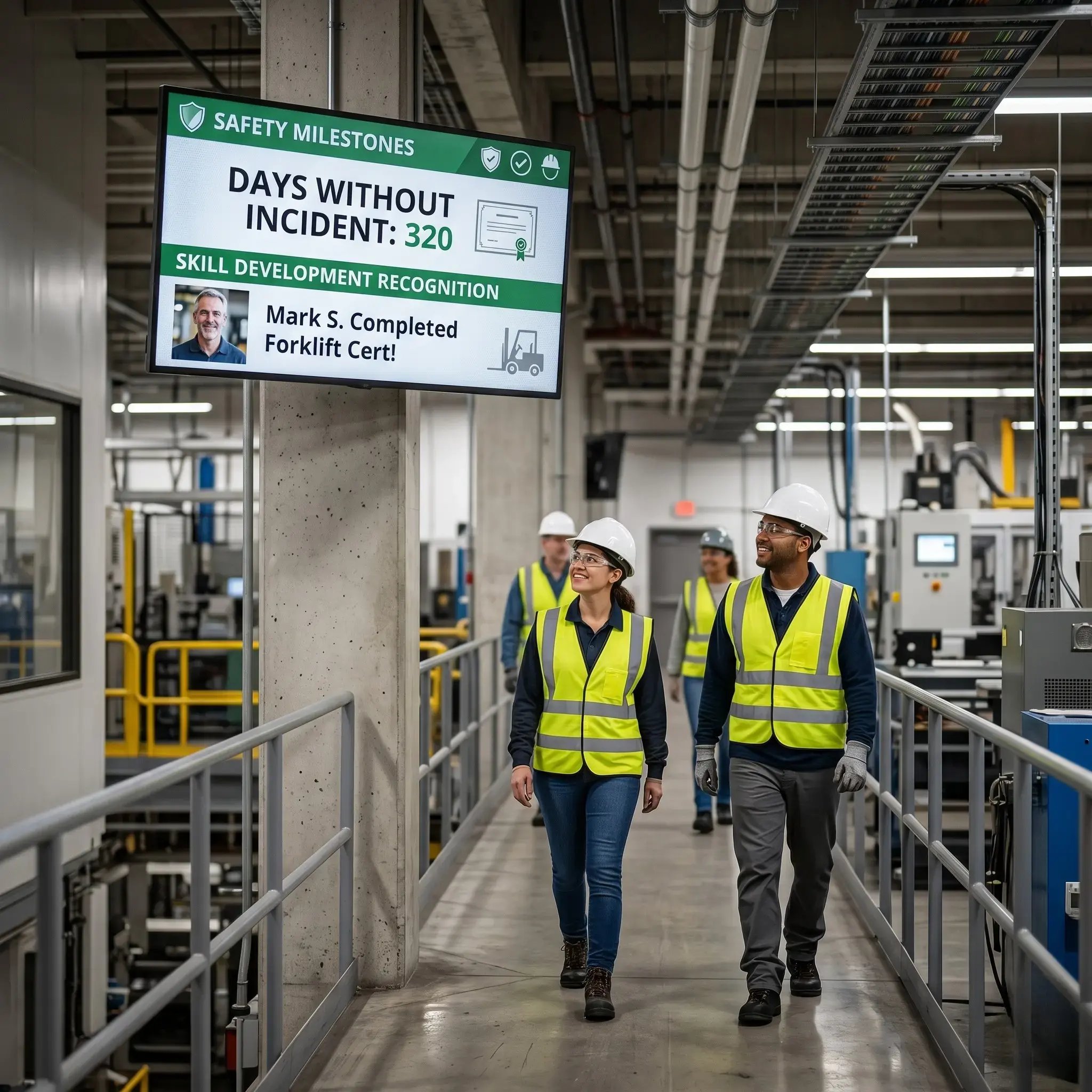
Days without incident, near-miss counts, OSHA & OHSA compliance targets: post these on a dedicated safety zone on every floor screen. Workers who can see the safety count trending up are more invested in keeping it there. When a milestone lands (100 days, 200 days), push it to every screen at once.
5. Give frontline supervisors the ability to publish floor announcements themselves.
One of the most consistent engagement gaps in manufacturing is the lag between a decision being made and the floor knowing about it. A CMS with role-based publishing means supervisors can push a schedule change, a quality update, or a shift recognition directly to the screens in their zone. No IT ticket, no print job, no 24-hour delay.
6. Connect HR updates to where workers actually are.
Benefits enrollment deadlines, training schedules, policy updates: these matter to workers. They don't reach workers if they live in an email inbox or on a bulletin board near the front entrance. Route HR announcements through the same managed display network as operational content. Same screen, different zone. Workers see it because it's on the floor.
Free Guide
Ultimate Guide to Digital Signage for Manufacturing Floor
7. Celebrate training completion and certification milestones.
Forklift certification, safety training, cross-training completion: these take real effort. Acknowledge them with the same visibility you'd give a quality win. A named recognition post on the floor screen takes seconds to publish. The signal it sends is that skill development is seen and valued.
8. Display quality metrics at the station level, not just in the supervisor report.
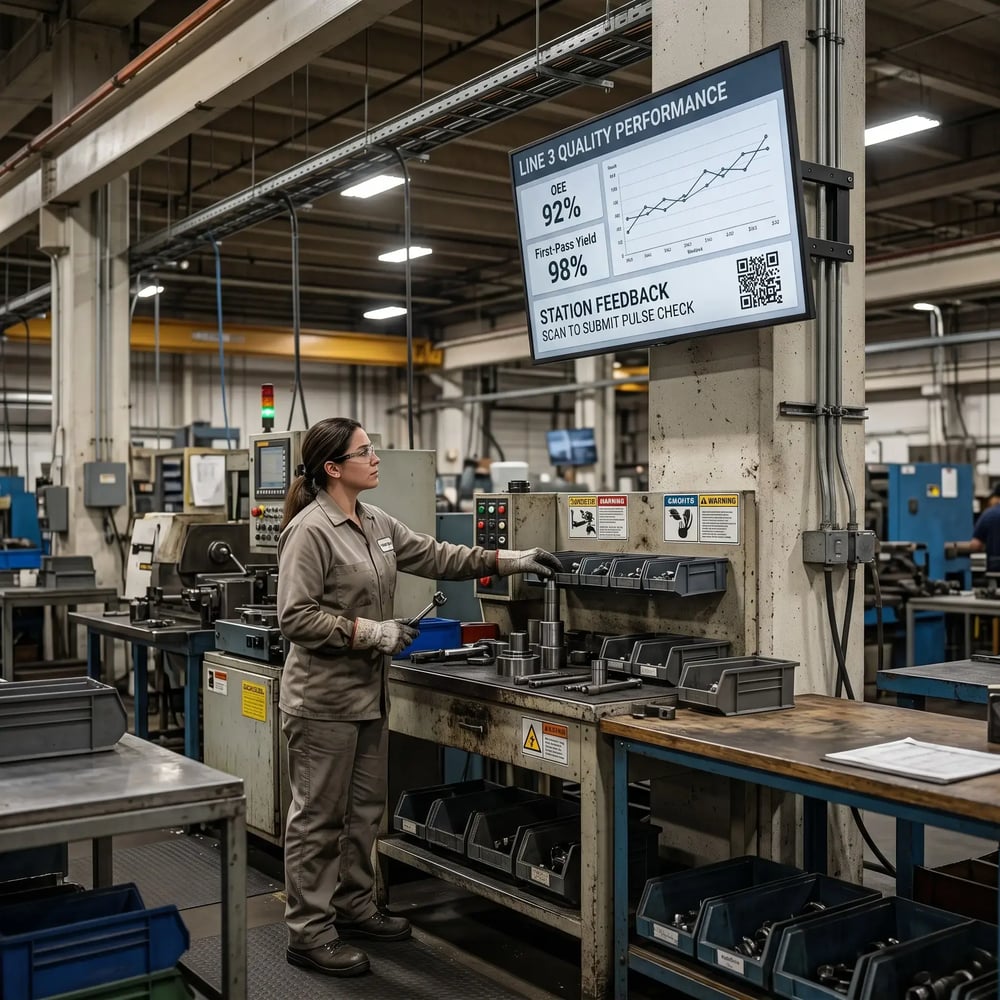
Reject rates, first-pass yield, quality targets: surface these at the station. Workers running a production line who can see their quality performance in real time are more connected to the outcome. They're not waiting for an end-of-shift debrief to find out how the line did.
Don't Miss This
5 Proven Strategies to Boost Labour Productivity in Manufacturing
Read the Article →9. Run scheduled leadership messages on a regular cadence.
A brief text update from the plant manager on priorities for the week, published to all floor screens on a fixed schedule. Not a corporate all-hands format. A direct, plain-language message from someone workers recognize. This is one of the least-used employee engagement activities in manufacturing companies that have digital display infrastructure, but it's one of the highest-trust ones when done consistently.
10. Close the loop with a feedback channel tied to your displays.
Post a question on the safety zone. Run a pulse check after a major change. Direct workers to a QR code where they can submit a response in 30 seconds. The screen becomes a prompt, not just a broadcast. This is where most floor communication systems stop short. The ones that add a response mechanism are the ones that workers actually treat as two-way.
Floor Engagement Checklist
A quick self-audit before your next shift. Check each item your floor is currently delivering:
- OEE or production output visible on floor-level screens, updated at least once per shift
- Dedicated recognition zone on production area displays, published by supervisors, not IT
- Shift handover summary visible before incoming crew starts
- Safety milestone counter on all floor screens, real-time
- HR and policy announcements routed through the floor display network
- Leadership message published on a fixed weekly or bi-weekly cadence
- Training and certification completions recognized publicly on screens
- Feedback mechanism (QR code or kiosk) connected to at least one display zone
If fewer than five of these are in place, the floor has information gaps that are directly affecting engagement.
How Do You Measure Employee Engagement in Manufacturing?
-
Running ideas without tracking whether they're working means you'll have no way to know what to keep and what to cut. How to measure employee engagement in manufacturing comes down to three practical inputs.
-
Pulse surveys, run consistently. Three-to-five question surveys on a monthly or quarterly cadence, administered via mobile, QR code, or a station kiosk. Not an annual engagement survey. Short and frequent.
-
Attendance and turnover data. These are lagging indicators, but reliable ones. If engagement improves, you'll see it in lower absenteeism and reduced frontline turnover before it shows in survey scores.
-
Content audits of your displays. Are supervisors updating recognition content? Is the handover board current at shift start? Is the feedback QR code getting responses? A simple review of what's being published tells you whether the communication infrastructure is actually being used.
See how CHEP tracks engagement outcomes across multi-facility deployments
View Case Study →What Changes After You Start
The first thing most operations notice is speed of information. Workers know what's happening on the floor because the floor is telling them. Supervisors spend less time fielding questions about targets, schedules, and results because the answers are already visible.
The engagement shift takes longer. Most operations see meaningful movement in pulse survey scores and early turnover reduction within two to three months of consistent execution.
Employee engagement in manufacturing industry environments that have moved to managed floor communication consistently point to the same finding: the driver isn't the technology. It's the discipline of putting current, relevant, worker-facing content on those screens every single shift. The technology makes that discipline feasible at scale. The commitment to do it is still on the leadership team.
We work with manufacturing and logistics operations across North America to build floor-level communication networks that connect workers to the data and recognition that keeps them engaged. If your team is evaluating digital recognition boards for manufacturing as part of a broader engagement strategy, a 30-minute call with our team will tell you whether our platform fits what you're building.
Frequently Asked Questions
How do you engage employees in manufacturing?
The most practical starting point is making information and recognition visible at the floor level, where workers actually spend their time. Posting production results, safety milestones, and shift wins on managed display screens close to production stations connects workers to outcomes they can see and influence. Employee engagement activities in manufacturing industry settings work best when they're embedded in the daily work environment, not delivered through channels workers never reach.
Why is employee engagement low in manufacturing?
The primary drivers are communication gaps and visibility gaps. Shift work fragments information flow. Physical separation from office-based channels means announcements and recognition rarely reach the production floor. Workers who don't see the results of their work, don't receive public acknowledgment, and don't get timely information about changes affecting their shift are more likely to disengage over time.
What are practical employee engagement ideas for a manufacturing plant?
Ideas that work consistently at floor level: posting real-time OEE and production targets on floor screens, running a recognition zone for shift wins that supervisors can update themselves, giving frontline supervisors direct publishing access for announcements, displaying safety milestone progress in real time, and routing HR updates through the same managed display network as operational content.
How do you measure employee engagement in manufacturing?
Track three inputs: pulse survey scores on a monthly or quarterly cadence, frontline attendance and turnover trends as lagging indicators, and a content audit of your floor displays to confirm the infrastructure is being used consistently. Survey scores reflect how workers feel. Attendance and turnover data reflect whether engagement is affecting behavior. The content audit tells you whether communication is actually reaching the floor every shift.
How long does it take to see results from a floor engagement program?
Operational improvements tend to appear quickly. Within the first few weeks, supervisors report that information reaches the floor faster and shift handovers run more smoothly. Engagement metric improvement takes longer. Most operations see meaningful movement in pulse survey scores and early turnover reductions within two to three months of consistent execution.

Brent Nacu
CRO at L Squared Digital
Brent Nacu is the Chief Revenue Officer at L Squared Digital, with 20+ years in digital signage. He helps organizations build display strategies that improve engagement, streamline operations, and drive real results.
LinkedIn