You can have the best benefits package in your industry. Flexible hours, remote options, competitive pay. And still find yourself with a team that is quietly checking out.
Because morale does not live in the perks. It lives in how people feel on an ordinary Tuesday when nothing special is happening. Whether they feel informed about where the company is headed. Whether their effort was noticed last week. Whether they feel like what they do actually matters to anyone beyond their immediate manager.
Those things do not require a bigger budget. They require better communication, consistent recognition, and a culture where people can see that they are part of something moving forward. That is exactly where corporate digital signage does its work, turning the spaces people move through every day into channels that keep them informed, seen, and connected.
Here is what actually drives employee morale, and five strategies that move it in the right direction.
.webp?width=1400&height=735&name=digital-signage-for-offices-and-corporate%20(1).webp)
What Drives Employee Morale? 5 Factors That Influence Workplace Satisfaction
Before you can fix morale, you need to understand what is breaking it.
1. Work Environment
- Workplace toxicity: Toxic environments, unhealthy competition, micromanagement, the absence of support- these drain morale faster than almost anything else. A positive environment built on collaboration, clarity, and mutual respect does the opposite.
- Physical workspace matters: Cluttered, noisy, or poorly organized spaces add friction to every interaction, and that compounds over time.
- Psychological Safety: Employees need to feel safe to voice opinions and concerns without fear of backlash. Psychological safety is a core contributor to high morale.
2. Leadership and Management Style
- Clear Communication: Managers who communicate clearly and consistently reduce uncertainty. Managers who listen, rather than just broadcast, build trust.
- Active Listening: The morale gap between a well-led team and a poorly led one is rarely about perks. It is almost always about the quality of daily communication.
- Empathy and Collaboration: Leaders who promote collaboration, support team goals, and show genuine empathy help build a positive work culture and improve morale.
3. Recognition and Appreciation
- Public Acknowledgment: Employees who feel seen for their contributions perform better and stay longer. That recognition does not have to be formal or expensive. A public callout, a feature on a shared display, a peer-to-peer acknowledgment- all of these send the same signal: your work is visible, and it matters here.
- Rewards and Incentives: Providing regular incentives (bonuses, benefits, or even simple rewards) for hard work keeps morale high and encourages employees to perform their best.
- Peer Recognition: Empowering employees to recognize and appreciate each other further strengthens a positive morale cycle.
4. Work-Life Balance
- Autonomy Over Time: Employees who have control over their work hours or the option for remote work often report higher morale. Flexibility helps employees manage their professional and personal lives.
- Burnout Prevention: Burnout does not announce itself. It builds. Employees who have some control over their time and workload report higher morale. Companies that signal genuine care for well-being, through policies and culture rather than just perks, see it reflected in how people show up.
- Company Benefits: Paid time off and mental health days show employees that their well-being matters and that the company cares about work-life balance.
5. Job Security and Career Growth Opportunities
- Feeling Secure: Job insecurity leads to stress, which negatively impacts morale. Offering stability in roles boosts employees’ confidence in their future with the company.
- Career Advancement: Employees who feel stagnant leave, either physically or mentally. Clear growth paths, regular performance feedback, and visible opportunities to develop new skills keep people invested in their roles and in the organization. Uncertainty about the future is one of the fastest routes to low morale.
- Clear Pathways: Providing employees with clear career paths and regular performance reviews encourages motivation and helps them feel connected to the company’s long-term goals.
5 Strategies to Boost Employee Morale With Corporate Digital Signage
Understanding what drives morale is only the beginning. The real work is in how you act on it consistently, at scale, across every team and every location. These five strategies go beyond surface-level fixes.
1. Recognize Effort Where Everyone Can See It
Recognition is the most underused lever in employee morale, and one of the most cost-effective. You do not need a formal programme. You need visibility.
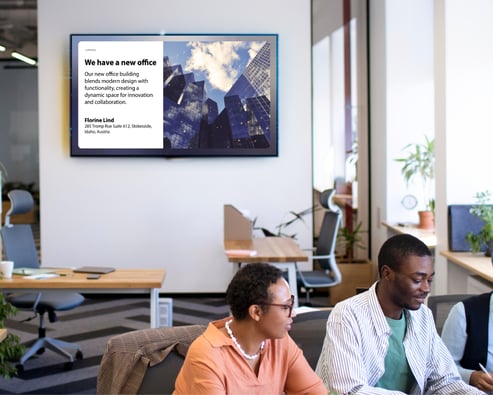
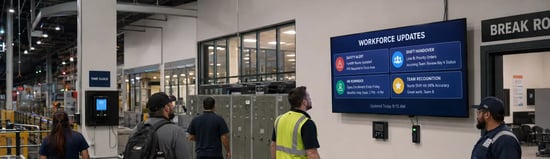
When someone goes the extra mile, make sure others see it. A feature on a shared hallway display, a name on a recognition board near the entrance, a team win called out in real time. Corporate digital signage solutions make this kind of consistent, visible recognition possible without requiring a manager to remember to act on it every time.
When acknowledgment is regular and public, it creates a culture where effort is reinforced rather than invisible. That shift in culture is one of the most durable morale improvements available.
2. Make Communication Something People Actually See
Unclear or inconsistent communication is one of the fastest routes to low morale. When employees do not know where things stand, what is expected, or where the company is headed, they disengage. That disengagement is not laziness. It is a rational response to uncertainty.
Digital signage for corporate communications changes the channel. Instead of key information living in inboxes or being mentioned once in a meeting, it lives on the walls where your teams work. Goals, progress updates, leadership messages, company wins- all of it is surfaced through digital signage for corporate communication in hallways, near time clocks, in common areas, wherever employees actually move through their day.
Corporate communications digital signage is not about broadcasting more. It is about making information unavoidable in a way that feels relevant, not intrusive. Employees who understand the bigger picture feel part of it. That sense of connection is where morale begins to grow.
The Shift Is Already Happening
$7.44B → $12.97B by 2033
The U.S. digital signage market is growing at 7.2% annually. A significant share of that growth is corporate, driven by internal communication and employee engagement. Companies are not investing in these tools for aesthetics. They are investing because passive communication stopped working.
Source: Grand View Research
3. Build a Culture That Protects Morale
Culture is what employees feel when no one is watching. You cannot mandate it. You have to build it and protect it deliberately.
That means normalizing feedback, prioritizing psychological safety, and making it clear that speaking up, admitting a mistake, or asking for help is treated as a sign of engagement rather than weakness. Leaders set this tone. When leadership models inclusion, resilience, and genuine empathy, teams follow.
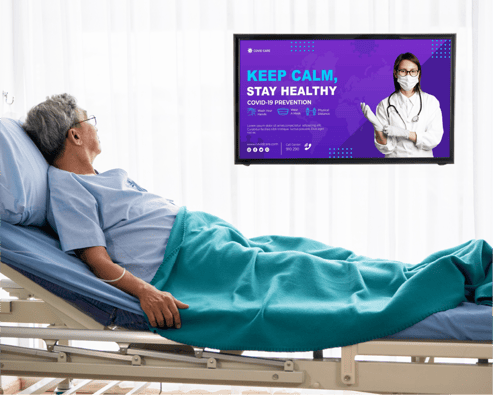
Corporate digital signage solutions support culture work by making values visible day to day. It is one thing to say your company prioritizes employee well-being. It is another to have your wellness programme, mental health resources, and upcoming team events on a screen where people walk past twice a day. Visibility makes culture credible.
This is also where digital signage support for corporate social responsibility becomes a tangible lever. Companies that use their internal displays to surface CSR commitments, community involvement, sustainability progress, and employee volunteer programmes send a clear signal: this organization stands for something beyond the quarterly result. For many employees, especially younger ones, that alignment between personal values and company values is a meaningful driver of daily morale.
4. Give People Autonomy and Trust Them to Use It
 Nothing undercuts morale faster than micromanagement. Employees who feel watched, second-guessed, or controlled at every turn disengage quickly. The opposite is also true. People who feel trusted perform better and stay longer.
Autonomy does not mean removing structure. It means offering options within it. Flexible hours, hybrid arrangements, the freedom to own how a piece of work gets done. These signal respect for your employees' judgment and their lives outside the office. That respect builds the kind of loyalty that perks and bonuses rarely achieve on their own.
5. Make Progress Visible, Not Just Expected
People want to feel like they are going somewhere. When employees cannot see that their work is moving the needle, they lose momentum. That is not a personal failing. It is a design problem.
The fix is visibility. Clear goals, regular feedback, and shared celebration of results give teams a sense of forward motion. Corporate digital signage software makes this practical at scale. A milestone board in the common area, a project completion counter on the office floor, a record month called out on a shared screen- these are not gimmicks. They are the difference between a team that feels like it is grinding and one that feels like it is building something.
Features like leaderboards, real-time dashboards, and milestone displays can be managed centrally through corporate digital signage software and updated without anyone in IT needing to action it. Progress becomes a shared experience. Shared experience is where team morale lives.
Want to see the full toolkit for a high-performing workplace? Read: 10 Must-Have Digital Workplace Tools for Maximum Productivity →
Making Employee Morale a Priority
Employee morale is not an HR metric. It is a business outcome. Low morale costs you in turnover, in productivity, and in the kind of culture erosion that takes years to repair.
Corporate digital signage is not a replacement for good leadership or strong culture. It is the channel through which both become visible, consistently, across every team and every location. Recognition gets seen. Communication lands where people actually are. Progress feels shared rather than assumed.
We work with corporate and enterprise organizations to deploy corporate digital signage solutions that keep employees informed, recognized, and aligned without adding overhead to your communications or HR teams. If your organization is evaluating what that looks like in practice, a 30-minute conversation with our team will show you exactly what it looks like in an environment like yours.
Make it Visible.

Frequently Asked Questions
-
How do you increase staff morale quickly?
Start with visibility. The fastest morale wins come from making recognition public, communicating clearly about company direction, and removing friction from the daily work experience. Corporate digital signage solutions make several of these moves practical immediately, without adding to management overhead or requiring a new programme to be built from scratch. -
What is a good example of a morale booster at work?
A good morale booster is anything that makes an employee's contribution visible to others. A public callout in a team meeting, a feature on a shared screen near the entrance, or a peer recognition post displayed in the break room. The medium matters less than the consistency. When recognition is regular and visible, morale follows. Digital signage corporate communications platforms make this kind of consistency easy to maintain across locations. -
What role does corporate digital signage play in employee morale?
Corporate digital signage turns physical spaces into active communication channels. It keeps employees informed about company performance, celebrates wins in real time, surfaces recognition where teams can see it, and reinforces values and culture continuously. Corporate communications digital signage is particularly effective in large or distributed workplaces where key messages typically get buried in email threads or missed entirely. -
How does digital signage support corporate social responsibility?
When companies use digital signage for corporate communications to highlight CSR initiatives, sustainability commitments, community partnerships, and employee volunteering programmes, it signals that the organization's values are real and not just marketing language. How does digital signage support corporate social responsibility in practice? By making those commitments visible where employees work every day. That visibility builds the kind of alignment between personal and organizational values that contributes directly to long-term morale. -
What should businesses look for in corporate digital signage software?
The right corporate digital signage software should integrate with your existing communication tools, support role-based content publishing so the right teams can update their own screens, and allow centralized control across multiple locations. Ease of use matters as much as features. If your HR team or internal comms team needs IT support every time they want to post a recognition update, the system will not be used consistently, and consistency is what drives the morale impact.

Brent Nacu
CRO at L Squared Digital
Brent Nacu is the Chief Revenue Officer at L Squared Digital, with 20+ years in digital signage. He helps organizations build display strategies that improve engagement, streamline operations, and drive real results.
LinkedIn